
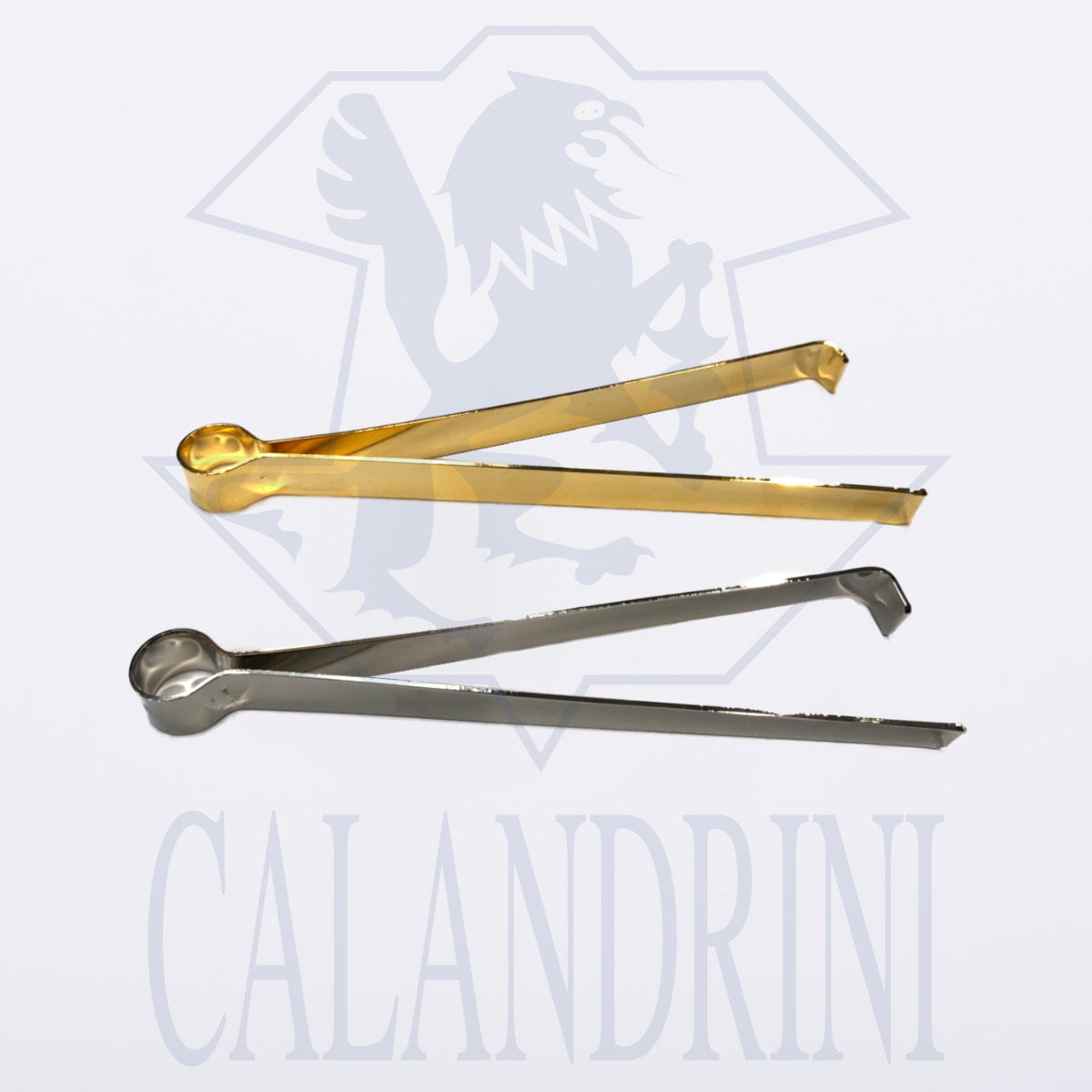



EUCHARISTIC Tweezers
8,30€ VAT excl.
Eucharistic Tweezers 16 cm.
As we live through this plague of the 21st century with growing concerns about the transmission of disease through the species of Holy Communion, it is interesting to examine the different forms of receiving Holy Communion with utensils that the Latin Church has employed over the centuries. While their appearance was due to scruples in handling the Blessed Sacrament and they acquired a ceremonial character, they proved practical for administering Holy Communion to the faithful during times of plague or when they were unable to consume the host.
Eucharistic tongs were first used to immerse particles of the Host in the chalice. While their origin is probably ancient, we see them becoming common in the papal court of Avignon during the 14th century, probably limited to the most solemn celebrations. Contemporary sources, including the Liber de Cæremoniis, also call them tenacula or furcheta and clearly state their Eucharistic use.
The liturgical use of tongs does not appear to have passed to Rome after the Western Schism, but they were still used to give Holy Communion to lepers or plague victims.


